
How an ad agency used customized AI to generate robust, interactive financial reporting

The Challenge
An antiquated financial reporting system had been in place for years. It was time to leverage the full potential and personalization of AI technologies.
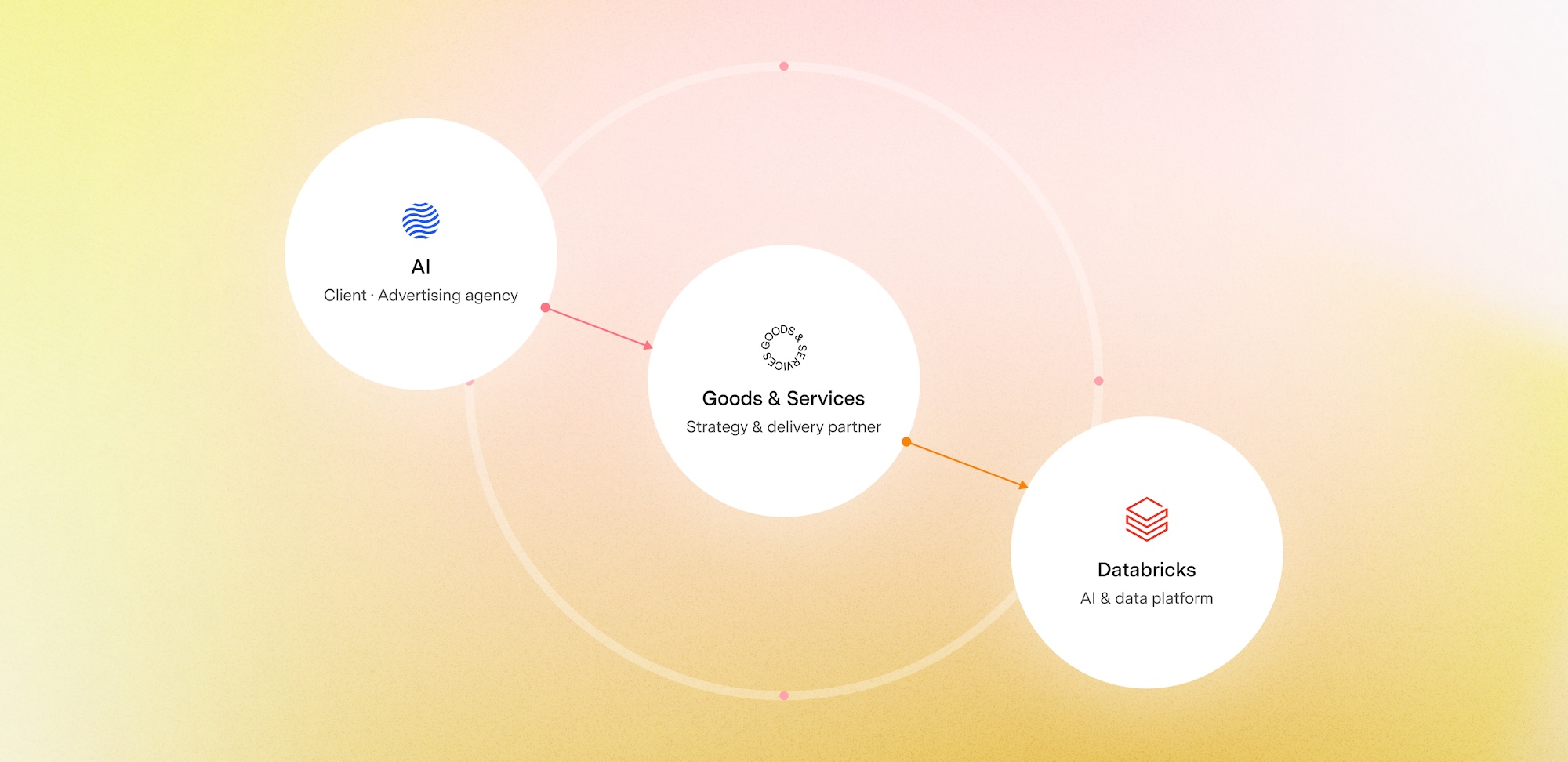
A subsidiary of a worldwide advertising agency wanted to explore whether AI could be used to improve its financial reporting. Its process had been very manual and spreadsheet-driven, touched by multiple sets of hands to arrive at reports used by C-level leaders in making decisions on addressing areas of underperformance and maximizing areas of growth.
C-level leaders required a deeper understanding of the “why” behind the results they were seeing – while also demanding quicker, more reliable data generation.
The challenge presented itself on two fronts: The company needed to leverage greater expertise in AI to go further than open source software; and it needed to achieve this advancement without straying from the established reporting system used by its parent company.
“Our business lives and dies on anticipating market trends and capitalizing on them. Internally, we needed a more innovative and dynamic level of analysis.”
Our Solution
Training Databricks AI to simultaneously enrich, streamline, and add high-value interactive analysis capabilities to an existing workflow
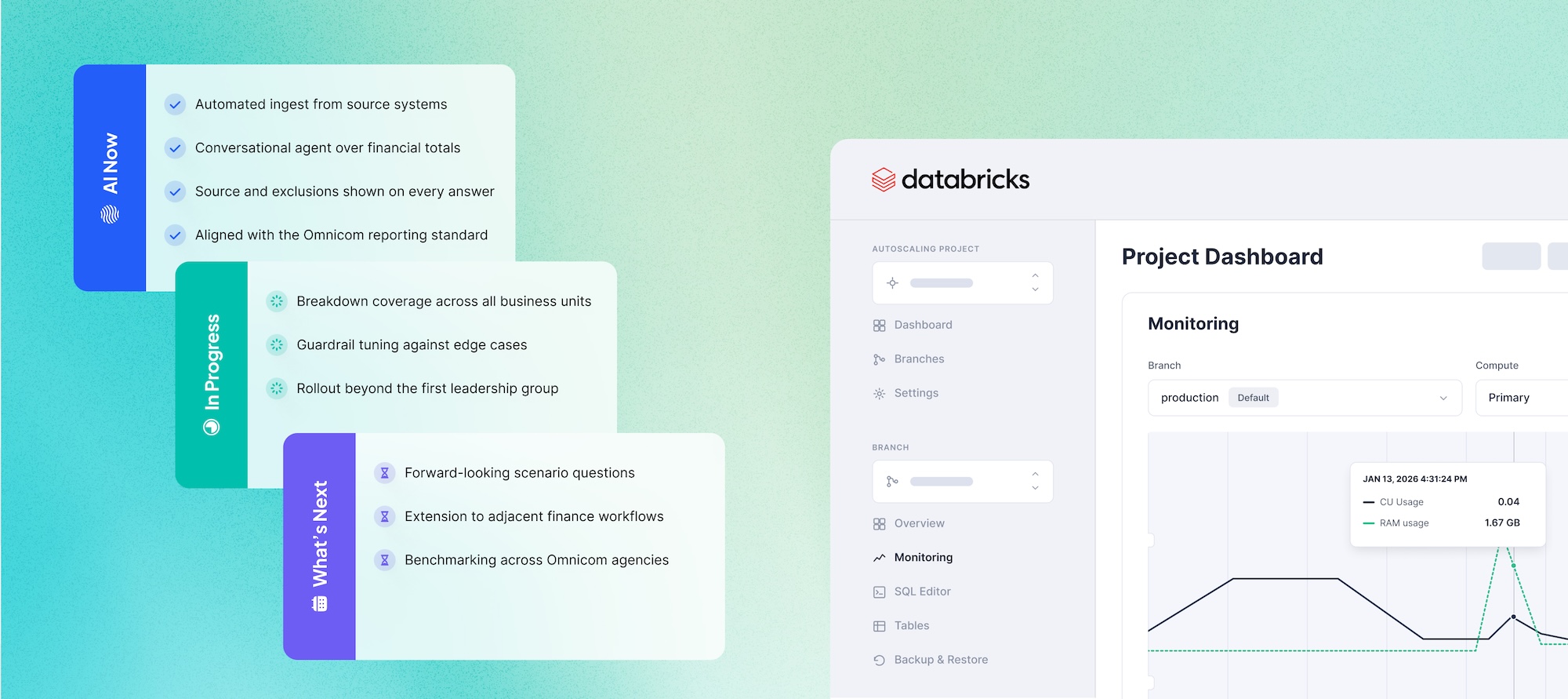
Goods & Services understood the need to help modernize the agency’s financial reporting processes, and began to work with Databricks, a cloud-based data platform. Databricks provided a set of predefined tools, but this would only be sufficient as a starting point. Goods & Services built on the Databricks platform to create a custom solution agent with considerably more flexibility, including the ability for users to have a conversation with the numbers.
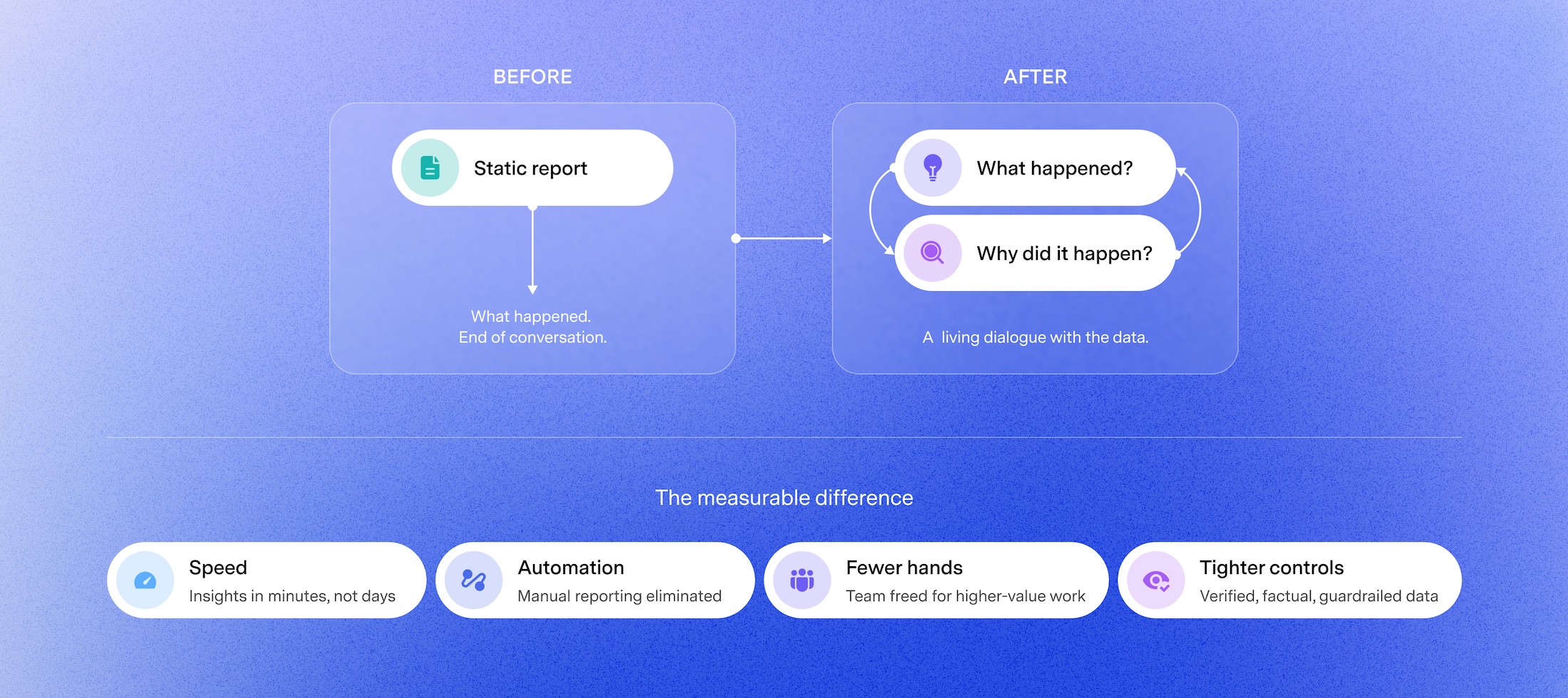
This gave agency leaders the ability for the first time to not only see how much revenue had been generated, but to ask where it came from and how those results could be enhanced. The newly expanded system also featured critical guardrails to ensure that all data was accurate, factual, and verified. By training AI in this way, Databricks became a true servant to the company that would do what it was asked perfectly.
It transformed AI into a valuable asset that understands the objectives of the business as a human would, and can communicate in a two-way dialogue.
Goods & Services became the perfect partner in this scenario, bringing not only its expertise in identifying the best tools and adapting them to the specific needs of its client, but also offering its comprehensive business acumen across multiple industry verticals, including accounting, real estate, treasury, manufacturing, healthcare, data virtualization/modeling, and many more.
“Goods & Services has worked with our parent company for many years. Its familiarity with our financial reporting system, combined with bringing in and customizing a Databricks AI-based solution, has led to the improvements experienced to date.”

The Impact
The custom Databricks solution delivered beyond the expectations of leadership, able to gather, interpret, and analyze enterprise-level data.
By diving deeper into standard AI-based tools to build a custom AI agent capable of providing a conversational analysis of financial data, Goods & Services brought higher quality financial reporting to this customer.
The benefits of speed, automation, less manpower, and tighter controls are now in place.
Through the analytical component of the new Databricks platform, leaders at this agency now can defend their results and see where their company is going with greater confidence. They cannot only see, but better understand what pockets of the company are doing better or worse than expected and can address those realities more rapidly and accurately. This is made possible by Goods & Services having directed the Databricks AI agent to provide both the financial totals and their underlying breakdowns, providing reliable and trustworthy commentary and serving as the starting point for follow-up dialogue. While this particular project remains a work in progress, initial feedback has been uniformly positive.
“The advances in time saved, trust increased, absorbing what the data represents more easily, and inquiring to gain a greater context, have already begun to sharpen our short- and long-term decision-making.”